A christening in Corfu asks less of a family than a wedding does, but it asks it in a much shorter window — usually a single morning — which is exactly why the details matter more, not less. This is the guide we send parents once a date is close.
Choosing a church
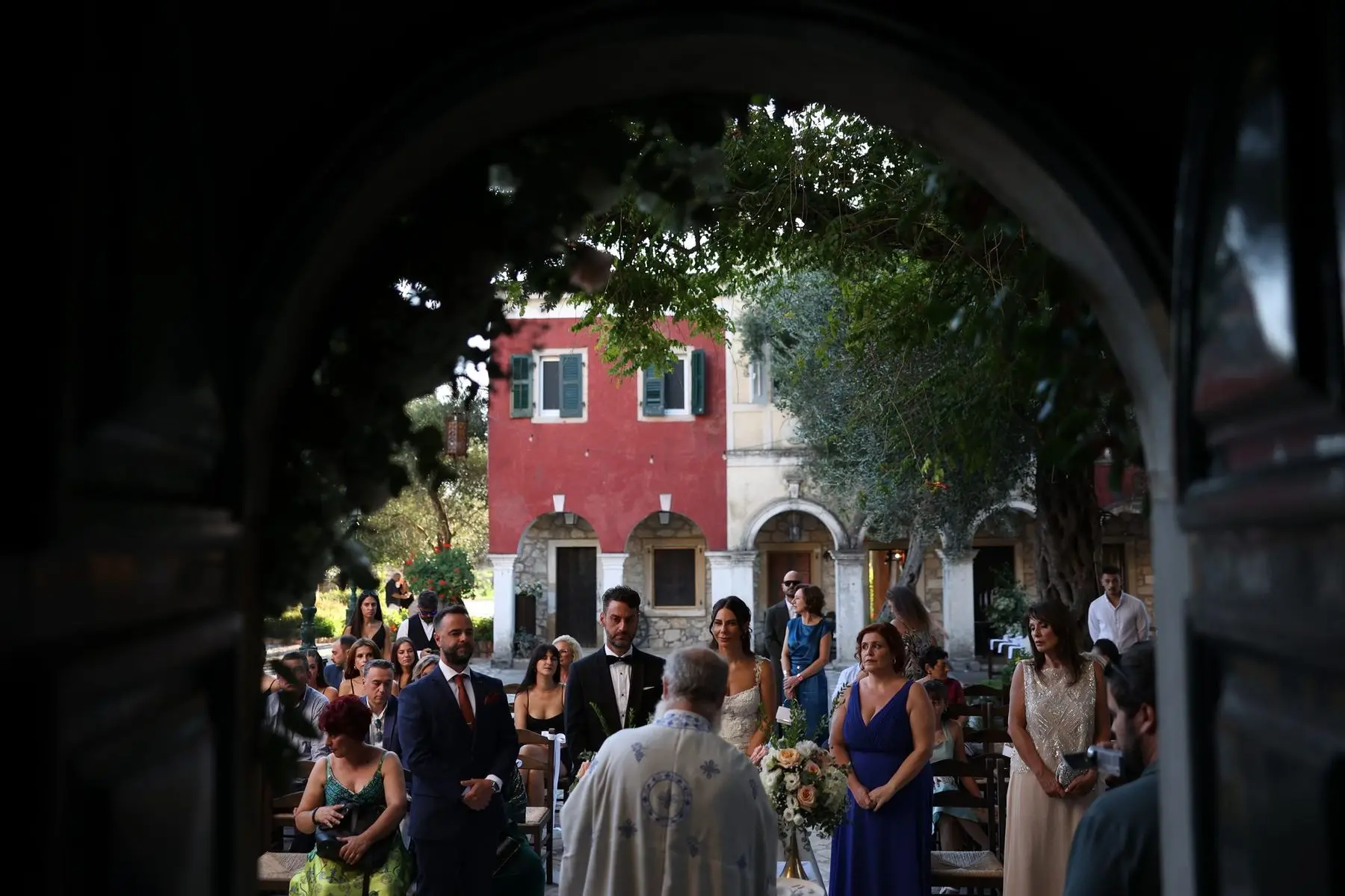
Corfu has no shortage of churches, but not every parish is set up for a family who lives elsewhere for most of the year. Village churches around Old Perivoli, Gastouri and Benitses are used to visiting families and have priests who will coordinate by phone and email well before you land. In Corfu Town, the churches around the Liston and Campiello are beautiful but small, and the acoustics and space work against a party of more than thirty guests standing through the service.
We choose the church around the reception venue, not the other way round — a fifteen-minute drive between the two lets the whole party arrive together and keeps the day to a single, unhurried thread instead of two separate events stitched together by traffic.
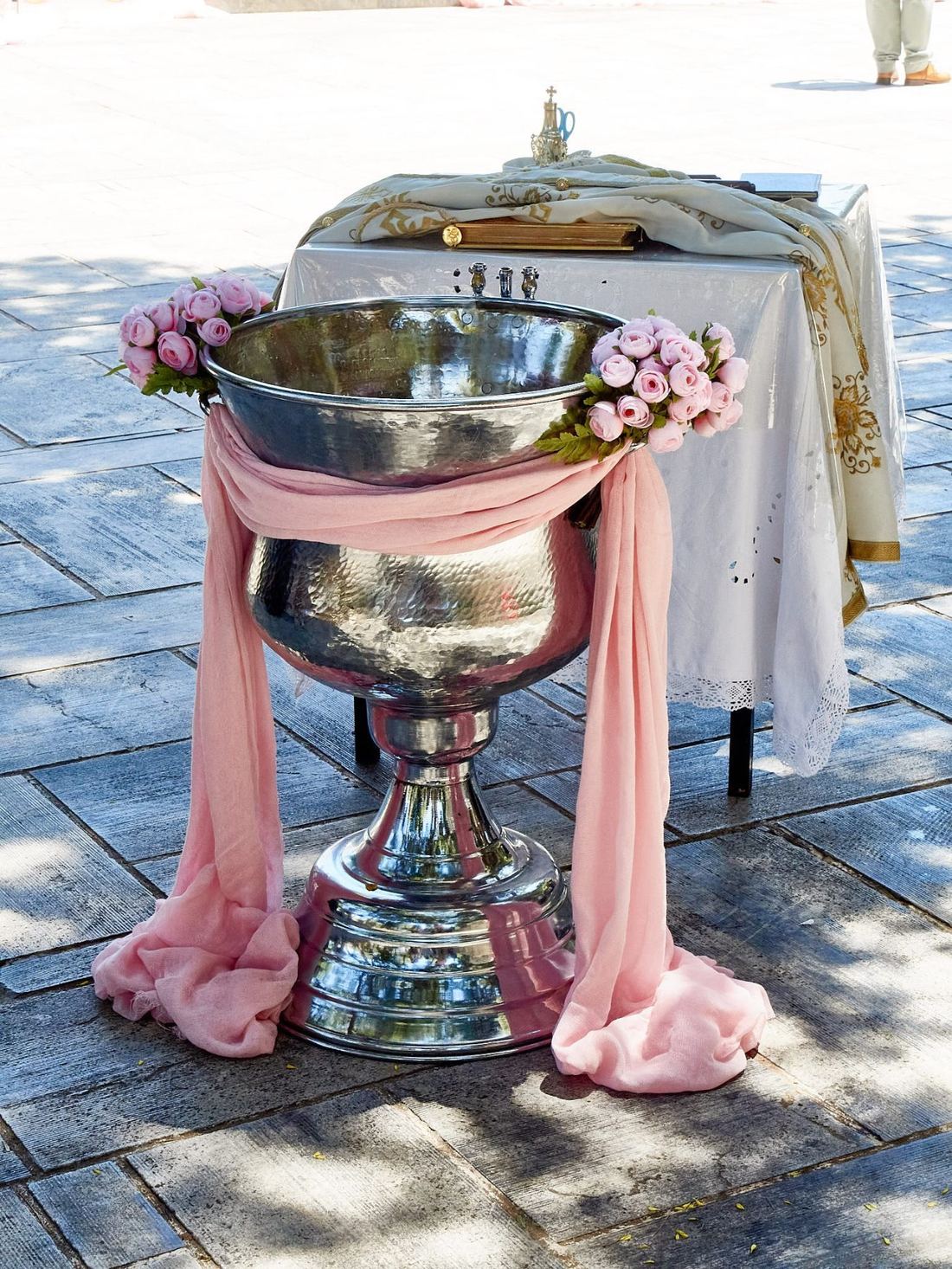
What a godparent actually provides
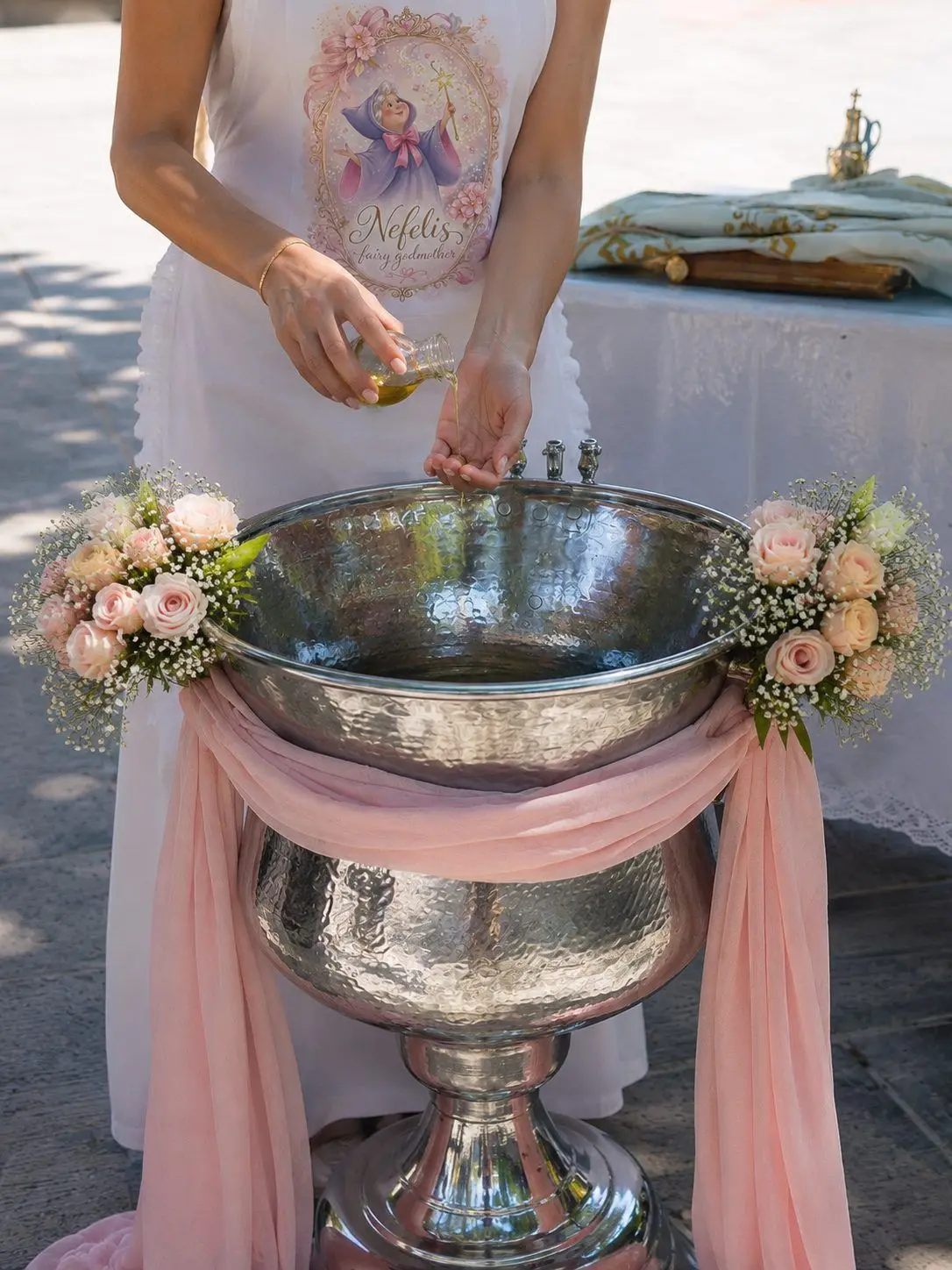
In the Greek Orthodox tradition, the godparent — usually one person, though some families choose a couple — provides the child’s cross and chain, the baptismal outfit, a set of new clothes for after the ceremony, the candles, and traditionally the martirika, small charms pinned to guests as favours. None of this is symbolic only: the priest will ask the godparent directly during the service to renounce on the child’s behalf and recite the Creed, so it helps to send the text in advance if it isn’t already familiar.
“The godparent carries the day as much as the parents do. We brief them properly, not as an afterthought two days before.”
For families where the godparent is flying in, we coordinate the outfit and cross with a local jeweller or dress shop ahead of arrival, so nothing depends on luggage.
The reception: smaller than a wedding, just as considered
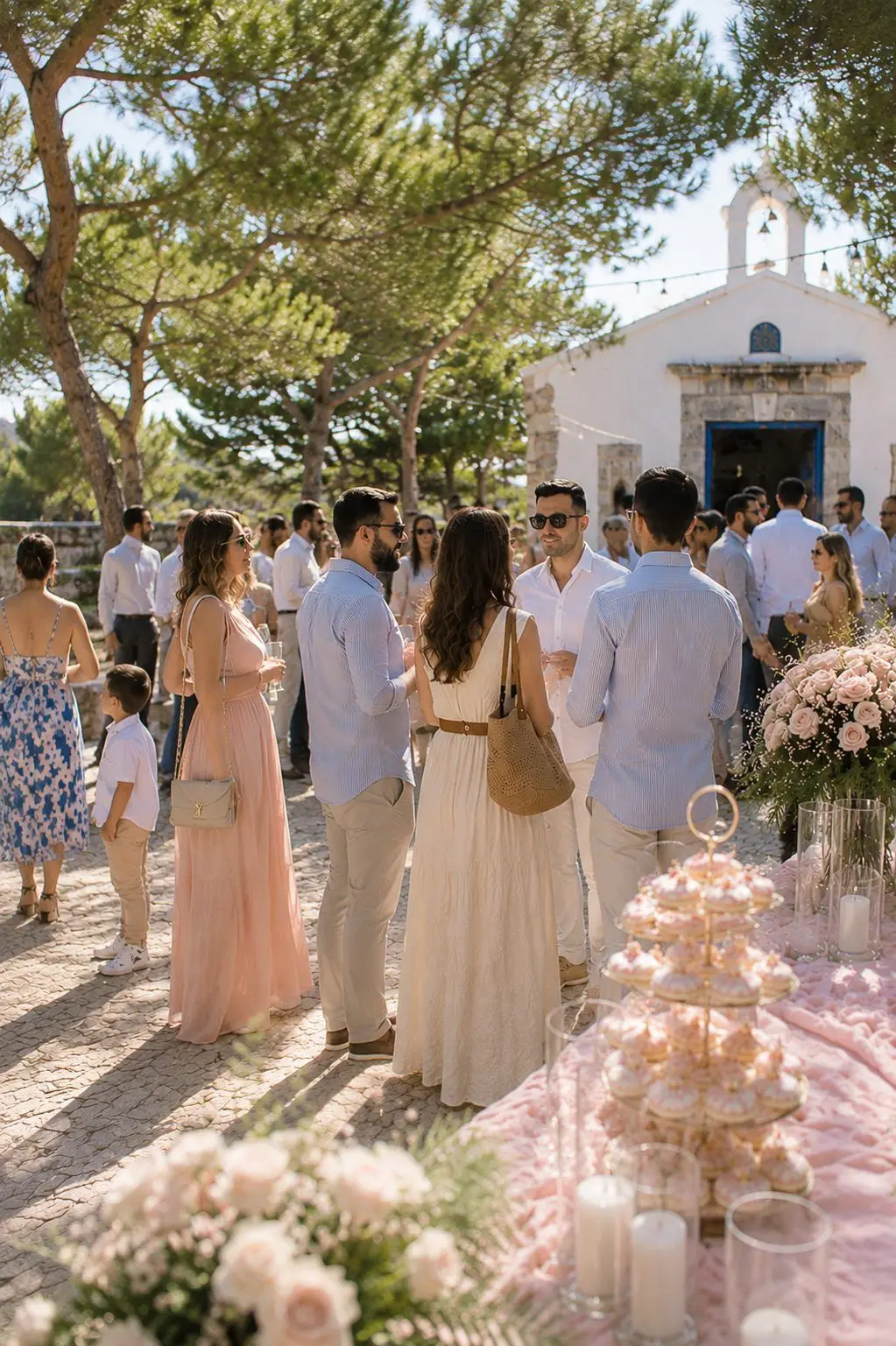
A baptism reception in Corfu is usually lunch or an early dinner for thirty to eighty guests, immediately after the service — there is rarely a gap to fill. Estates and tavernas with a private room work better than large event venues built for weddings; the scale is wrong otherwise, and a christening lunch in a room designed for two hundred feels thin rather than intimate.
Children are almost always present in numbers, so we plan a shaded, supervised corner apart from the adult tables rather than treating it as an afterthought.
Martirika and favours
The martirika — small pins or charms, often matching a colour theme — are given to every guest as they arrive at the church, not the reception, so they need to be ready before the ceremony starts, not during lunch. We usually pair them with a printed name-day card, since a baby’s baptism is also when their name is formally given.
How far ahead to plan
Four to six months is comfortable for a Corfu baptism with a guest list from abroad — enough time to confirm the church, book a venue for a Saturday in the May–September window, and have stationery and favours made properly rather than rushed. Local families with a smaller guest list can move much faster, sometimes within six to eight weeks.
Can a family living abroad baptise their child in a church in Corfu?
Yes. Most village parishes are used to this and will coordinate the date, paperwork and any translation needed by phone and email before the family arrives.
Who is allowed to be a godparent in a Greek Orthodox baptism?
Anyone baptised in the Orthodox faith may stand as godparent; a priest can advise on exceptions for godparents of a different denomination, which vary by parish.
How long does a Greek Orthodox baptism service take?
Around forty-five minutes to an hour, depending on the priest and whether more than one child is baptised that morning.
How far ahead should we book a reception venue in Corfu?
Four to six months for a Saturday between May and September; village tavernas with a private room can sometimes take a booking with less notice outside peak weeks.