Long before anyone sees the flowers or tastes the food, they open an envelope. The weight of the paper, the handwriting, the colour of a wax seal — in a few seconds they tell your guests what kind of day they are being invited to. Stationery is the first chapter of every event, and very often the only part people keep.
Stationery sets the tone before the day begins
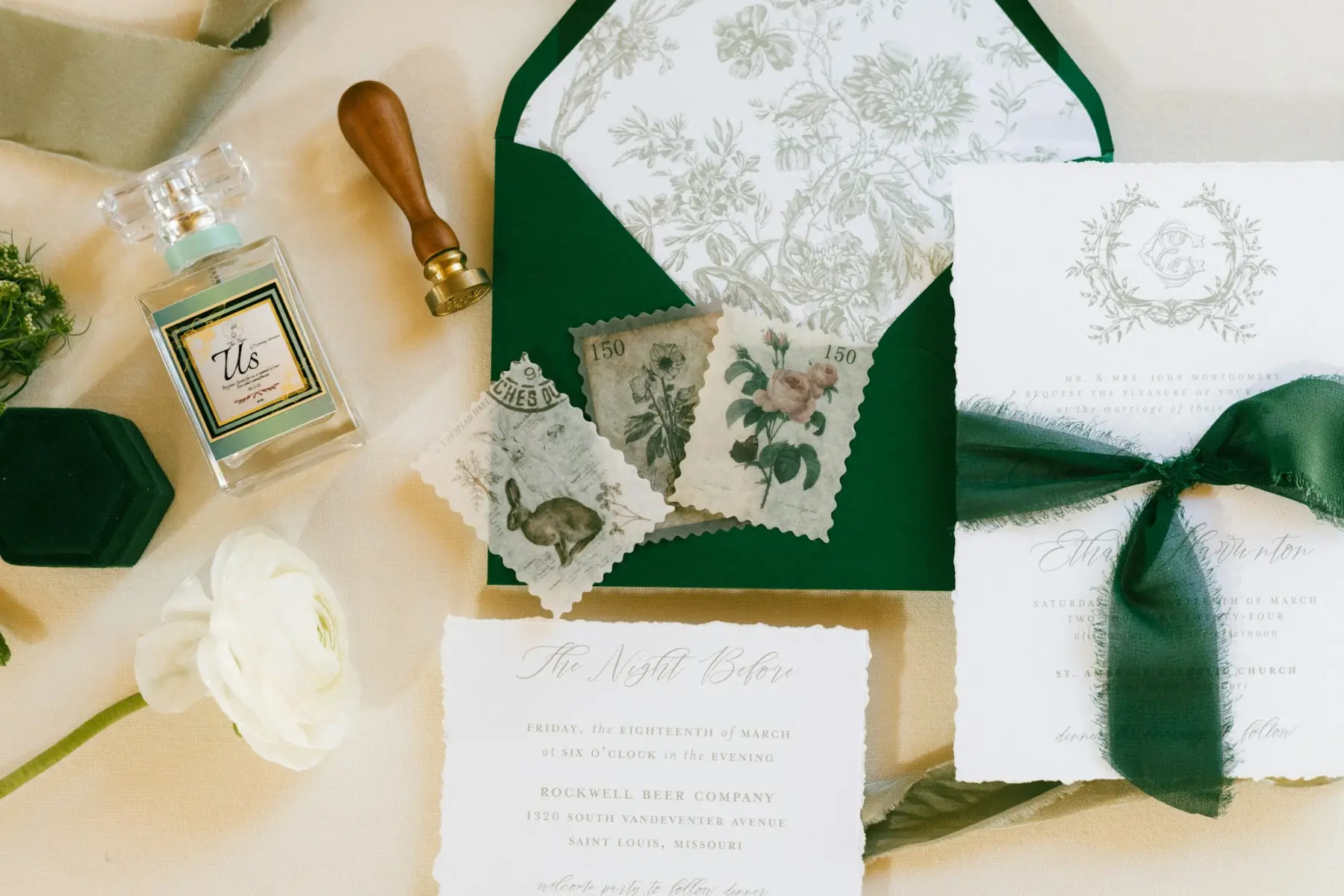
An invitation says far more than a date and a place. Heavy cotton paper and a letterpressed monogram say “black tie in a Venetian courtyard”. A watercolour olive branch on a deckled card says “long lunch in a garden”. Guests read those signals instinctively — they decide what to wear, how formal the evening will be and how excited to feel, all before they have read a single line of text.
That is why we treat stationery as the beginning of the design, not an accessory to it. The palette, the typefaces and the illustration we choose for the invitation become the visual language of the whole celebration.
It carries the information that makes the day work
Good stationery is also the most practical thing you will commission. It tells guests where to be and when, what to wear, how to get there, where to stay, when to reply and whether they can bring children. For a destination wedding in Greece — with flights, ferries, hotels and a ceremony in a language half the guests do not speak — a clear, well-designed suite saves hundreds of messages and a great deal of confusion.
A typical wedding suite includes a save the date, the invitation, an RSVP card or link, and an information card for travel and accommodation. Many couples add a small map, a weekend schedule and a card explaining the traditions of a Greek Orthodox ceremony.
On the day, paper guides every guest
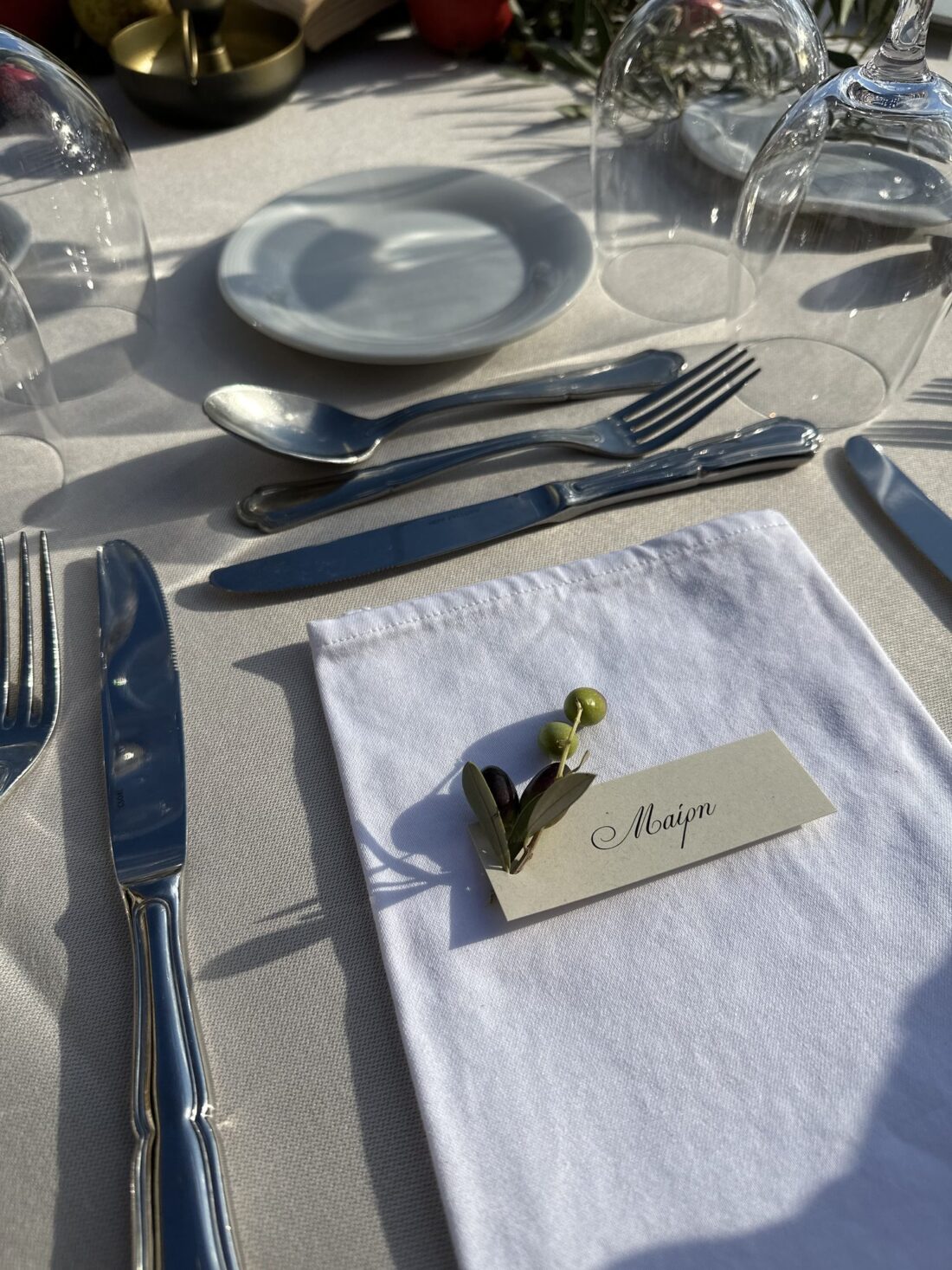
Once guests arrive, stationery quietly takes over the role of host. A welcome sign at the entrance, an order of service at the ceremony, a seating plan, escort and place cards, table names, menus, a bar list, favour tags and, afterwards, thank-you cards. Each piece answers a question before anyone has to ask it.
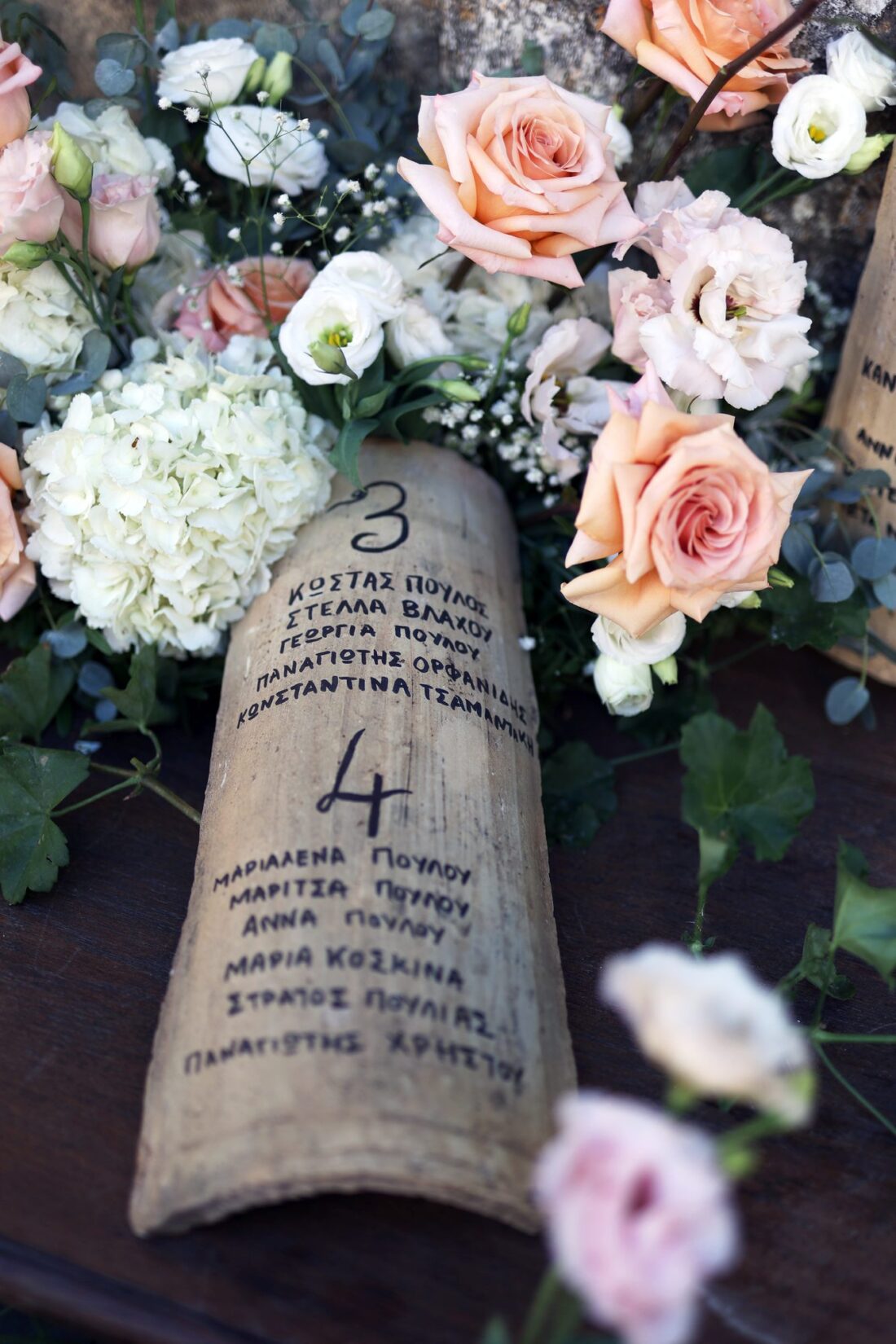
These are also the pieces that appear in almost every photograph of the tables. A beautifully set place with a handwritten name card is the image guests share, and the one you will look at in twenty years.
One visual identity, from save the date to thank you
The difference between an event that looks expensive and one that looks assembled is almost never the budget. It is consistency. When the monogram on the envelope reappears on the napkins, the cake, the signage and the thank-you card, guests feel — without knowing why — that everything was thought through.
We design a small identity for every celebration: a monogram or emblem, a palette of three or four colours, one or two typefaces and a recurring motif, often drawn from the place itself — an olive branch in Athens, a Venetian arch in Corfu.
Paper, print and finishing
The feel of a piece of stationery comes from the paper and the printing technique as much as the design. The options we use most often:
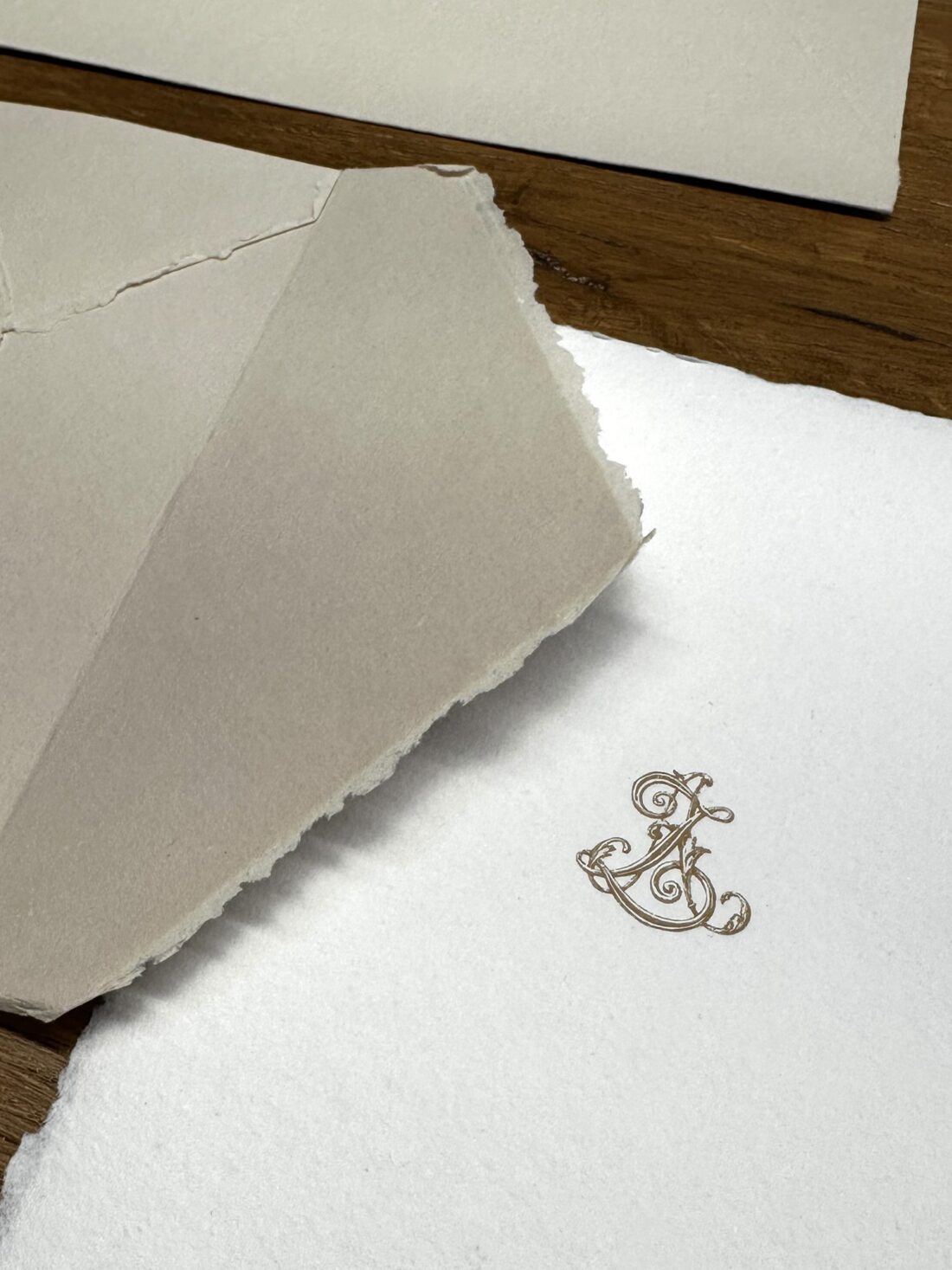
- Cotton paper with a deckled edge — soft, heavy and handmade in feel.
- Letterpress and blind embossing — text pressed into the paper, so it can be felt as well as read.
- Hot-foil — gold, copper or silver for monograms and fine lines.
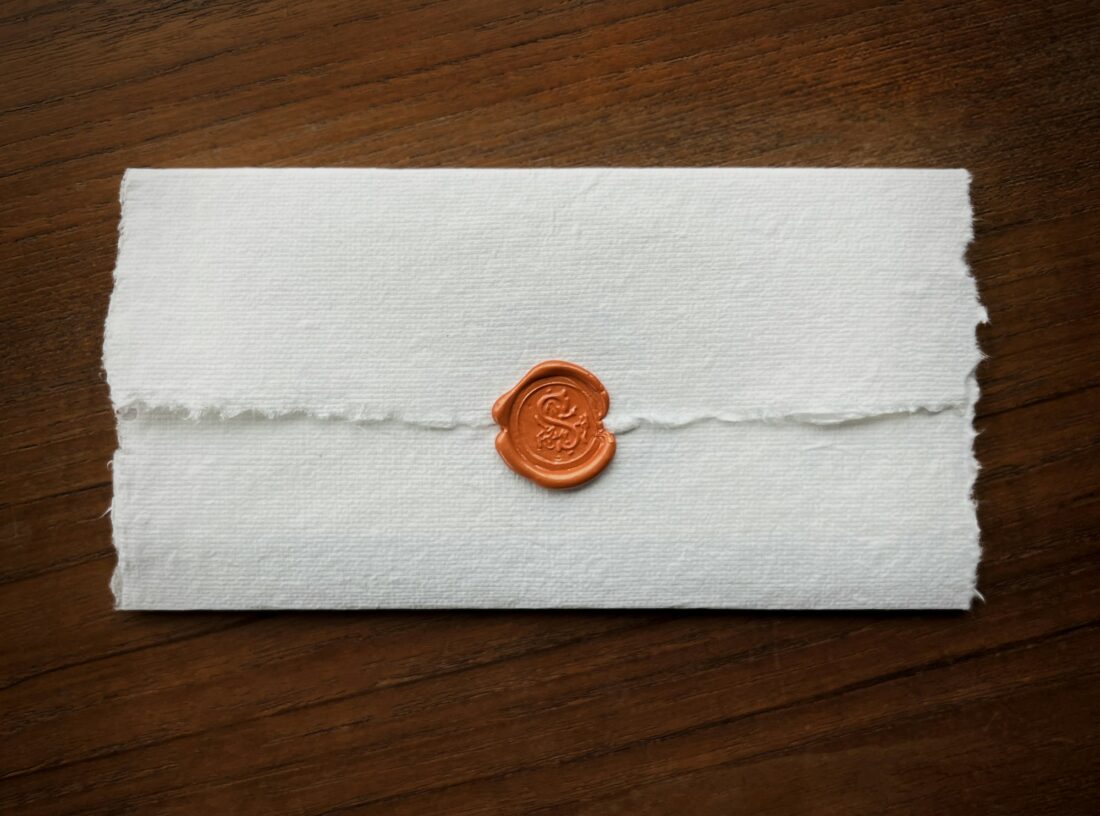
- Wax seals — the most tactile first impression there is.
- Vellum wraps, ribbon and envelope liners — layers that make opening the envelope an event of its own.
- Hand calligraphy — for envelopes, place cards and seating plans.
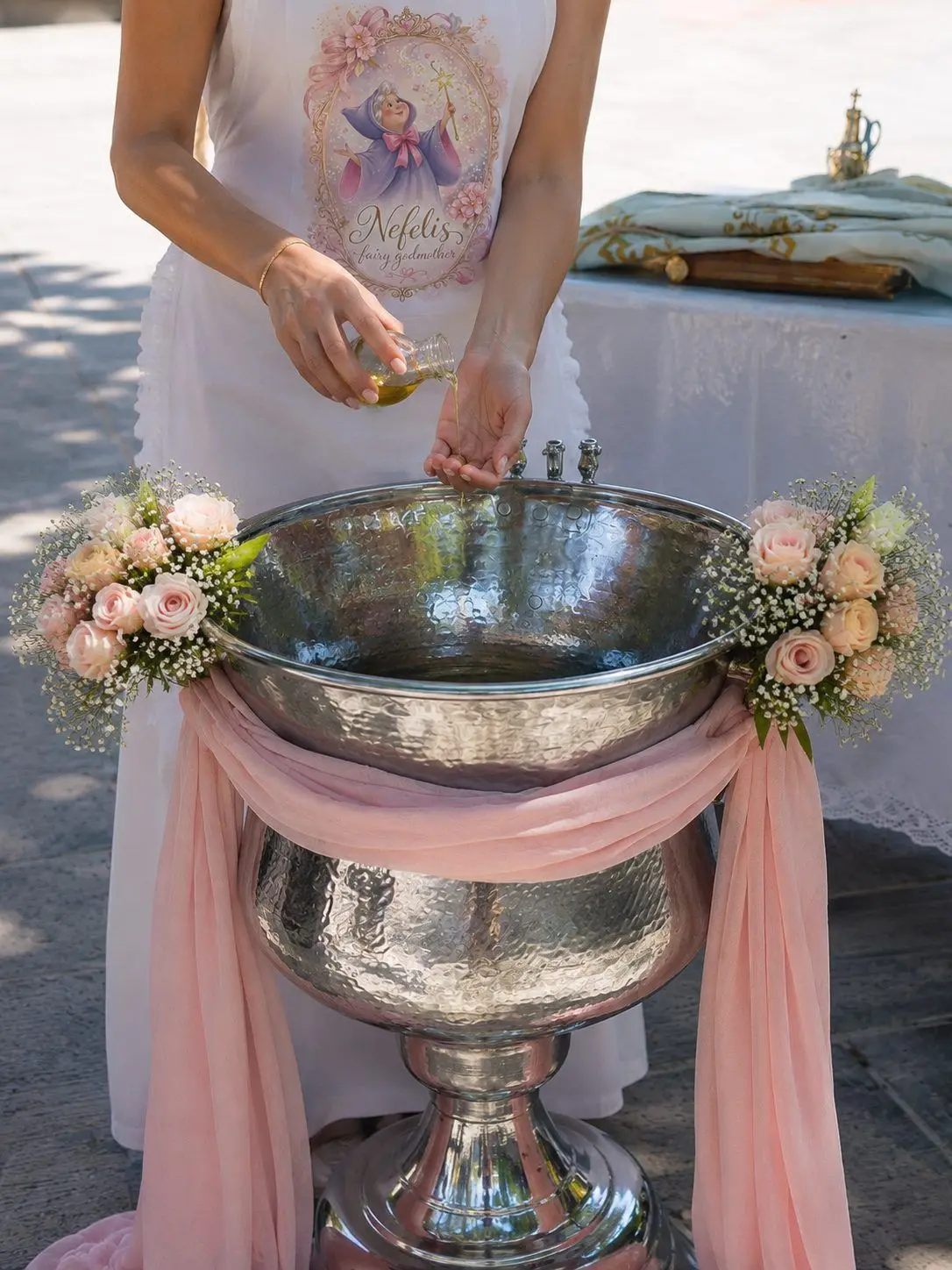
For Greek weddings with international guests we often design bilingual suites in Greek and English, with typography that holds both alphabets in balance. For baptisms, the stationery extends to the witness tokens (martyrika), favour tags and a wish book for guests to sign — as we did for Nefeli’s baptism.
When to order your wedding stationery
- Save the dates: 9–12 months before a destination wedding; 6–8 months before a wedding at home.
- Invitations: sent 3–4 months before a destination wedding. For a wedding in Greece with mostly local guests, 6–8 weeks is traditional.
- RSVP date: about 6 weeks before the day, so seating and catering can be confirmed.
- Day-of stationery: finalised about 2 weeks before, once the seating plan is fixed.
- Thank-you cards: within three months of the celebration.
Design and printing usually take six to eight weeks, and specialist techniques such as letterpress or foil add a little more — so the design conversation should start well before the first posting date.
Printed or digital?
Both, in the right place. Digital works well for save the dates, travel updates and a wedding website. The invitation itself deserves to be printed: it is the piece guests put on the fridge, tuck into a mirror frame or keep in a drawer for decades. We design the digital and printed pieces as one system, so the website looks like the invitation and the invitation looks like the day.
Who designs our stationery: La Memoirette and Poua Design
Every piece of paper you see at our events is designed in-house, by the same people who plan the event. La Memoirette is the events atelier of Poua Design, the Athens graphic design and branding studio founded by Antigoni Poulou. Same studio, same team, same desk: Poua Design creates brand identities, packaging and print for companies, and La Memoirette brings that same discipline to weddings, baptisms and private celebrations.
That is why our invitations are designed like identities — as a system, not a template — and why the paper, the tables and the signage always speak the same language. You can commission stationery on its own, anywhere in the world, or as part of full planning and styling. Tell us about your celebration and we will send you a first idea.
What is included in a wedding stationery suite?
A full suite usually includes a save the date, the invitation, an RSVP card or link and an information card for travel and accommodation, followed on the day by a welcome sign, order of service, seating plan, place cards, table names, menus and favour tags, and finally thank-you cards.
When should wedding invitations be sent?
For a destination wedding, send save the dates 9 to 12 months ahead and invitations 3 to 4 months ahead. For a wedding in Greece with mostly local guests, invitations are traditionally sent 6 to 8 weeks before the day.
How long does it take to design and print wedding stationery?
Design and printing usually take six to eight weeks. Letterpress, foil or hand calligraphy add a little more time, so the design should start well before the first posting date.
Can you design bilingual Greek and English invitations?
Yes. For weddings and baptisms in Greece with international guests we often design bilingual suites, with typography that balances the Greek and Latin alphabets.
Can we order stationery without full event planning?
Yes. Styling and stationery is one of our three services. We design invitations and printed pieces on their own and ship them anywhere in the world.
Is La Memoirette the same company as Poua Design?
Yes. La Memoirette is the events atelier of Poua Design, the Athens graphic design and branding studio founded by Antigoni Poulou. The same team designs brand identities for companies and stationery for weddings, baptisms and private celebrations.