A wedding by the Ionian.
Some weddings begin with an aesthetic. Others begin with a story. This one began with Corfu.
- Occasion
- Wedding of Antigoni & Loukas
- Where
- Danilia Village, Corfu, Greece
- Palette
- Ivory, white, soft blush, dusty pink & subtle salmon
- Scope
- Full planning, concept & creative direction, invitation & stationery, styling, day-of direction
On 20 September 2025, an entire village at Danilia became the setting for an intimate wedding shaped around the bride’s Corfiot heritage, family memories and traditions. Danilia Village — a recreation of a 1930s Corfiot village, complete with narrow lanes, a village square, traditional houses, small shops and its own church — was not chosen simply as a beautiful wedding venue in Corfu. It became part of the narrative itself.
La Memoirette’s creative direction began with one simple principle: nothing should be there simply because it was beautiful. Every object, flower, textile and ritual needed to connect to something real — a place, a person, a family or a memory.
What emerged was a Corfu wedding that became a contemporary expression of family heritage, filled with objects that had already lived one life and, for this day, were given another.
Corfu was not used as a theme. It was used as a memory.
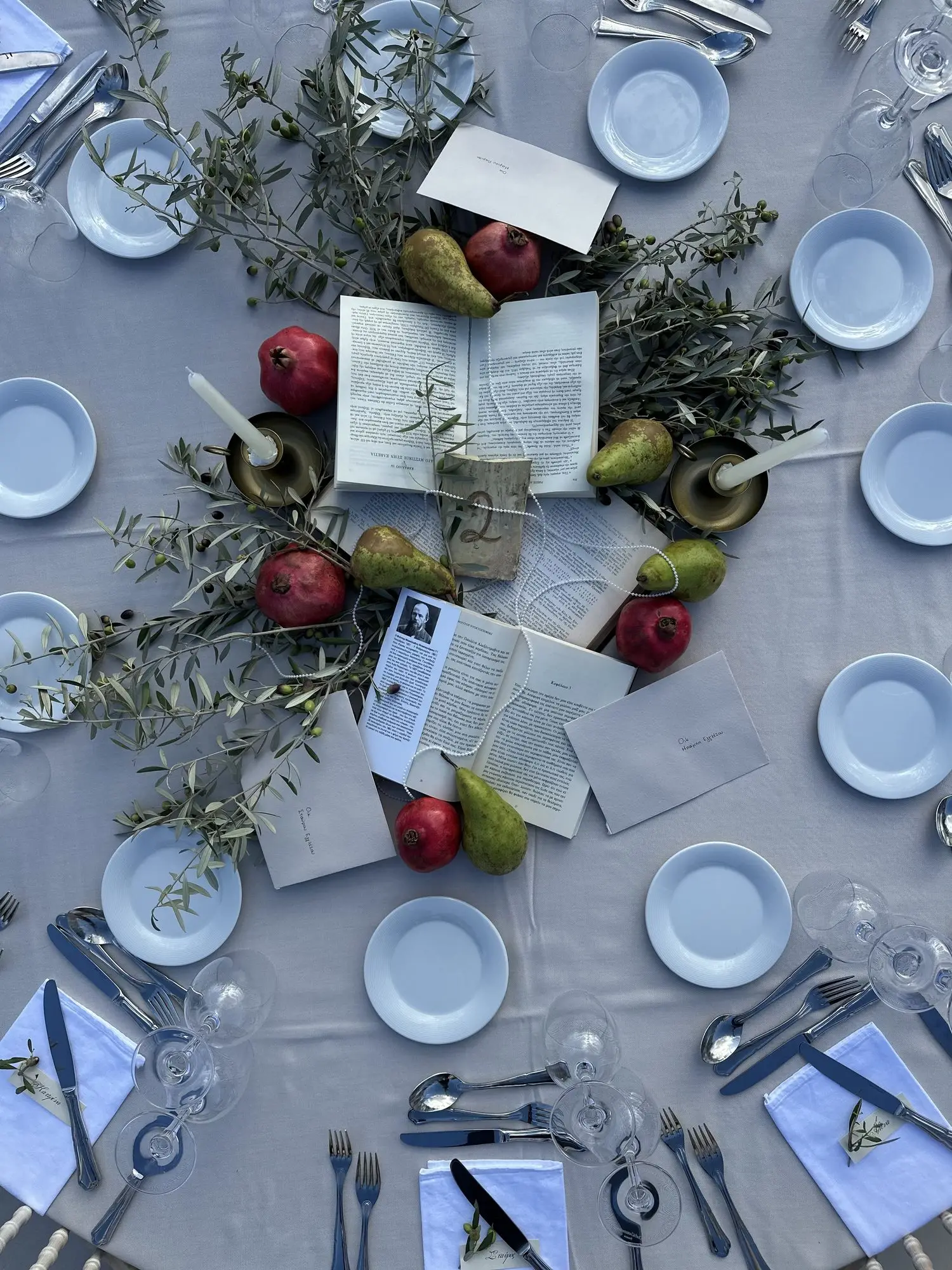
Family lace and embroidered linens, passed down from the bride’s grandmother and the groom’s family, became tablecloths. Old roof tiles from the bride’s family home were transformed into a seating plan, with each guest’s name handwritten directly onto them. At the entrance, an old frame belonging to her grandmother — once used to display one of her own embroideries — welcomed guests with the couple’s names and wedding date.
Even the tsoutsoumida, the distinctive headscarf of traditional Corfiot dress, became part of the day as a reference to a local custom. Traditional musicians accompanied the bride towards the groom, while the flavours of the celebration remained rooted in the island through Corfiot recipes, local treats and kumquat preserves.
We did not want to recreate tradition. We wanted to allow it to continue.
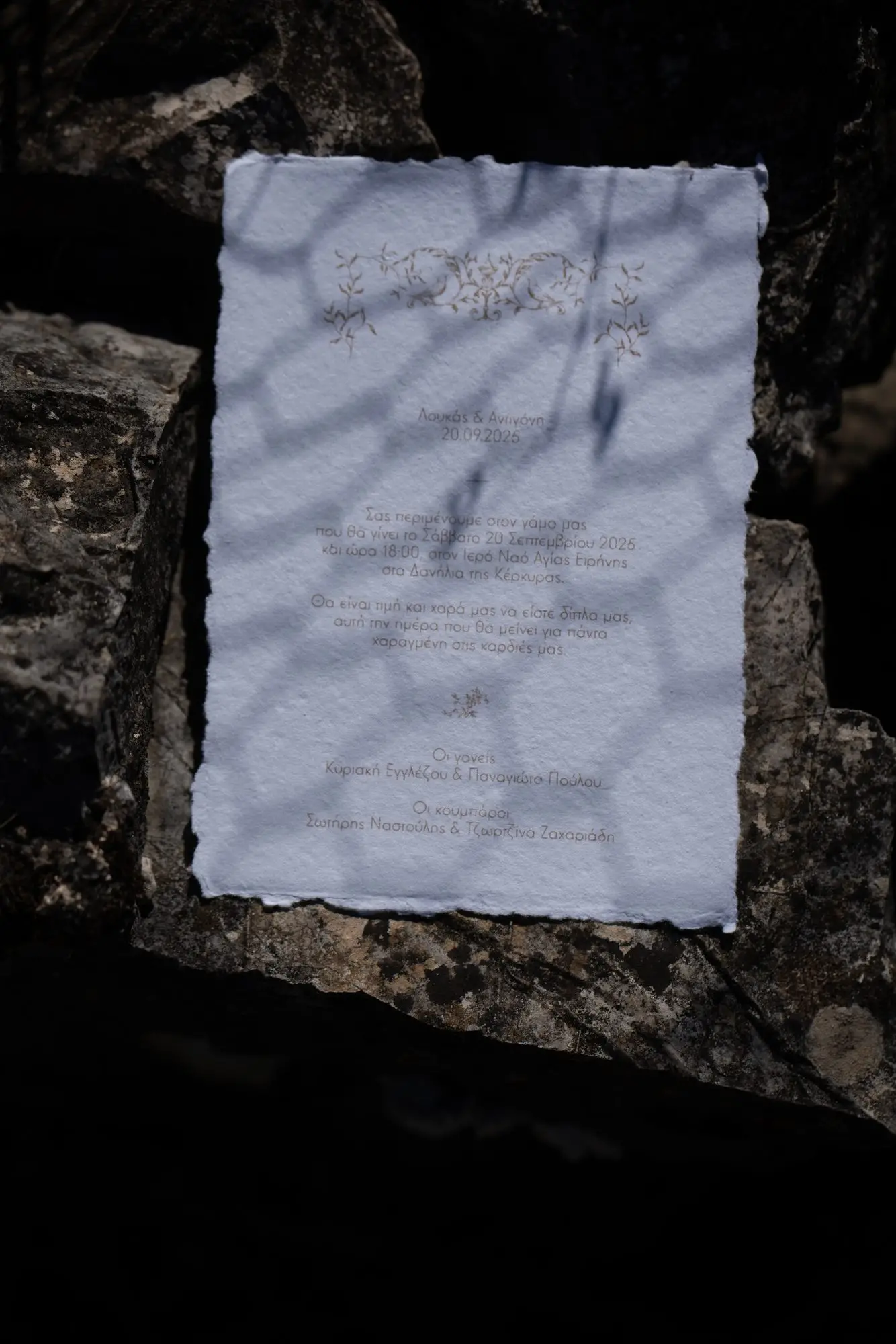
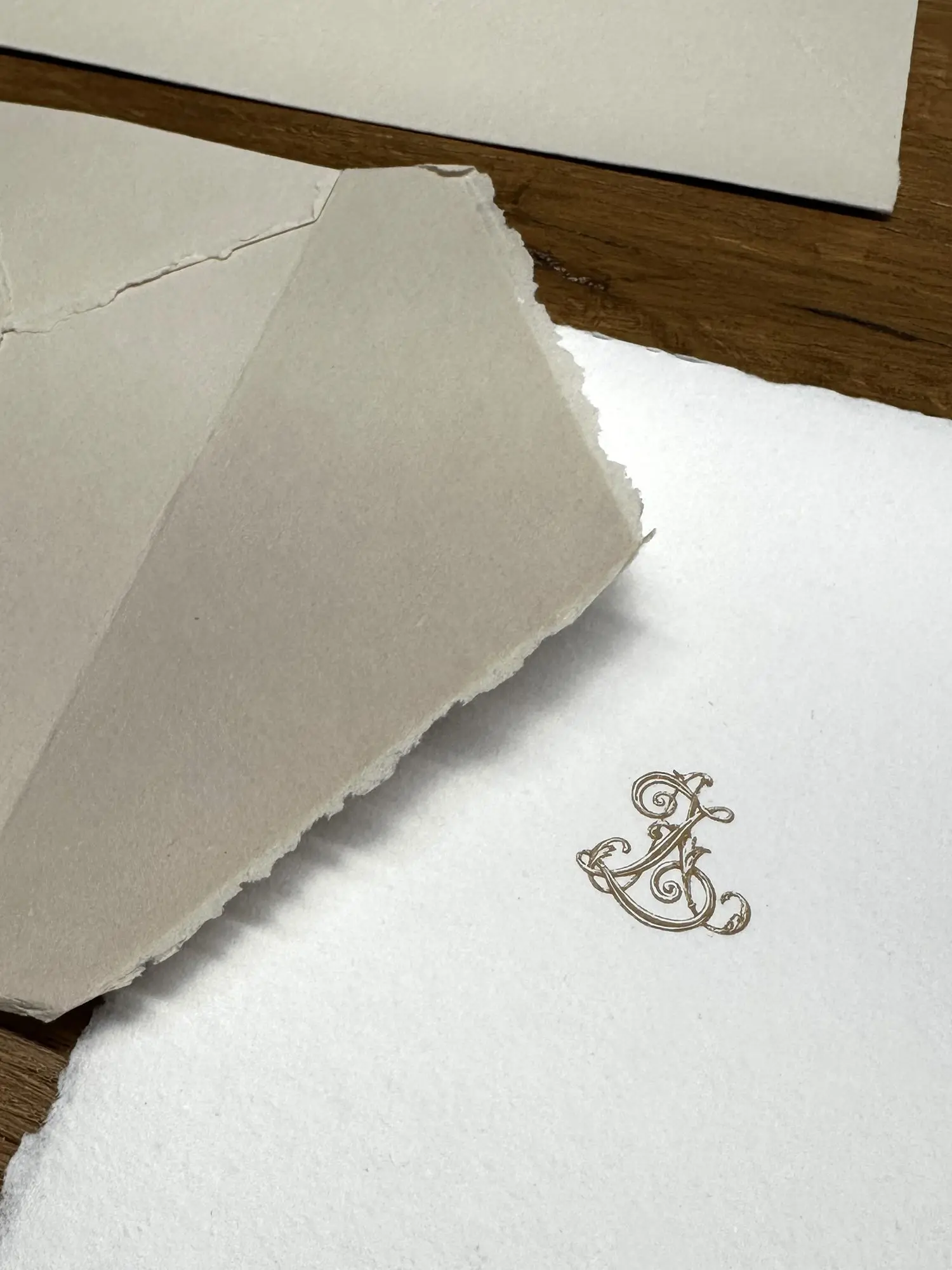
The visual identity was approached almost as if we were designing the identity of a place: with its own palette, materials, typography and details that quietly reappeared throughout the day.
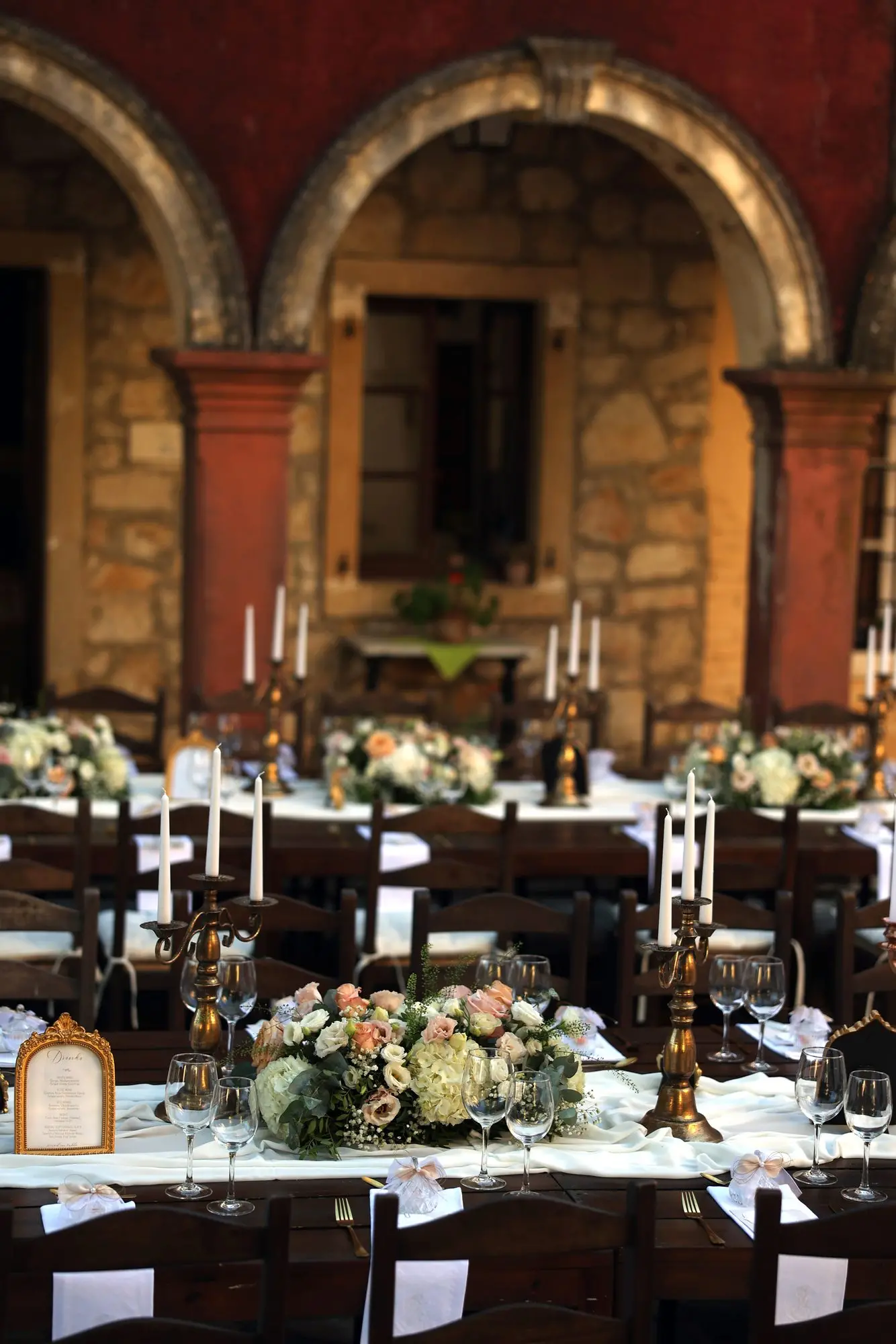
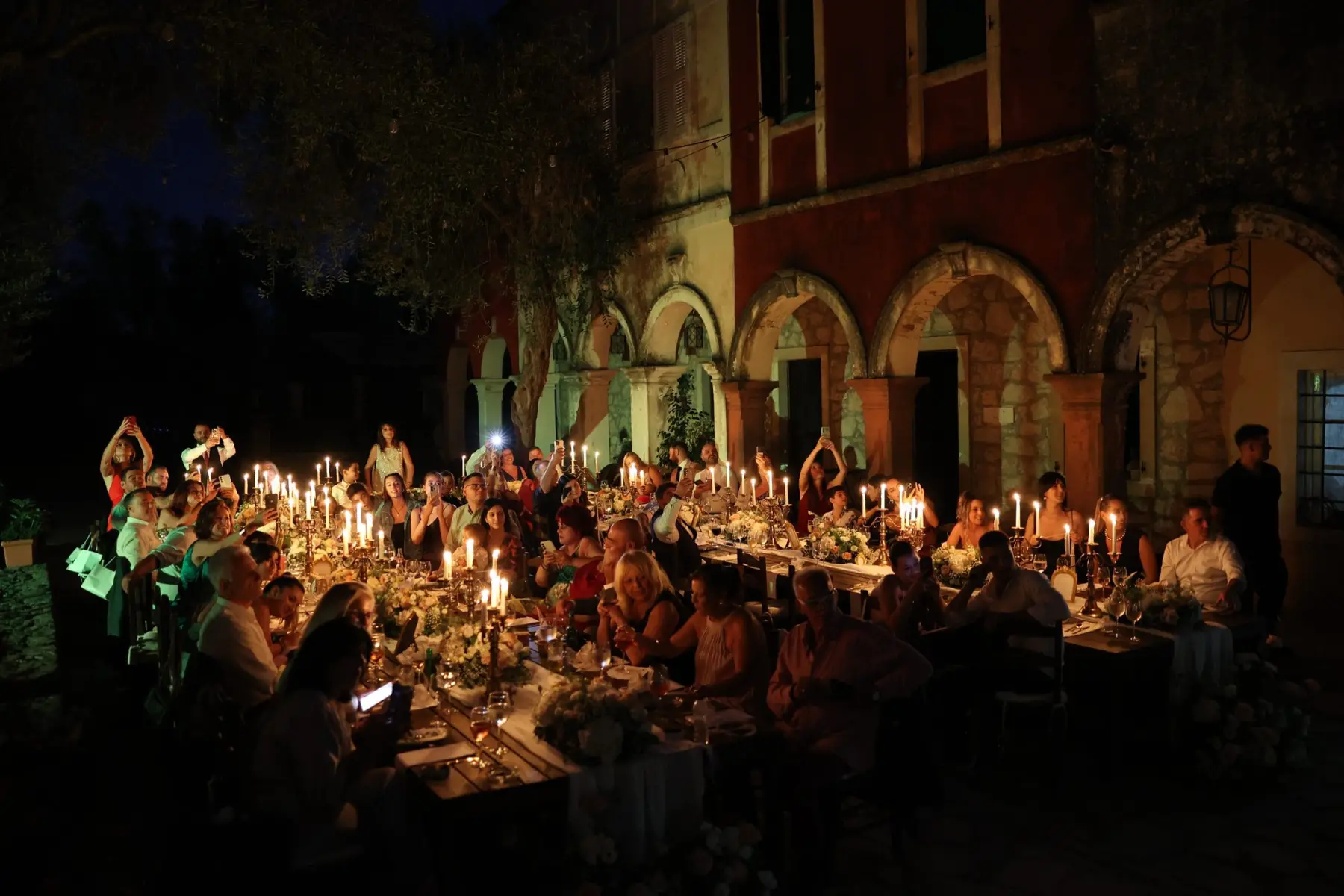
The invitation was created on handmade paper with hand-torn edges, while the couple’s monogram appeared across the printed pieces and smaller details of the wedding. Ivory, dusty pink, soft blush and subtle salmon tones were layered with white flowers, antique lace, glass and the warm glow of hundreds of candles.
The wedding favours were small glass bonbonnières, reminiscent of the ones once found in our grandmothers’ homes, filled with chocolates. Not because they were vintage, but because they felt familiar.
That became the thread connecting the entire wedding design: nothing was chosen simply to follow a trend. Everything needed to feel as though it had always belonged to this story.
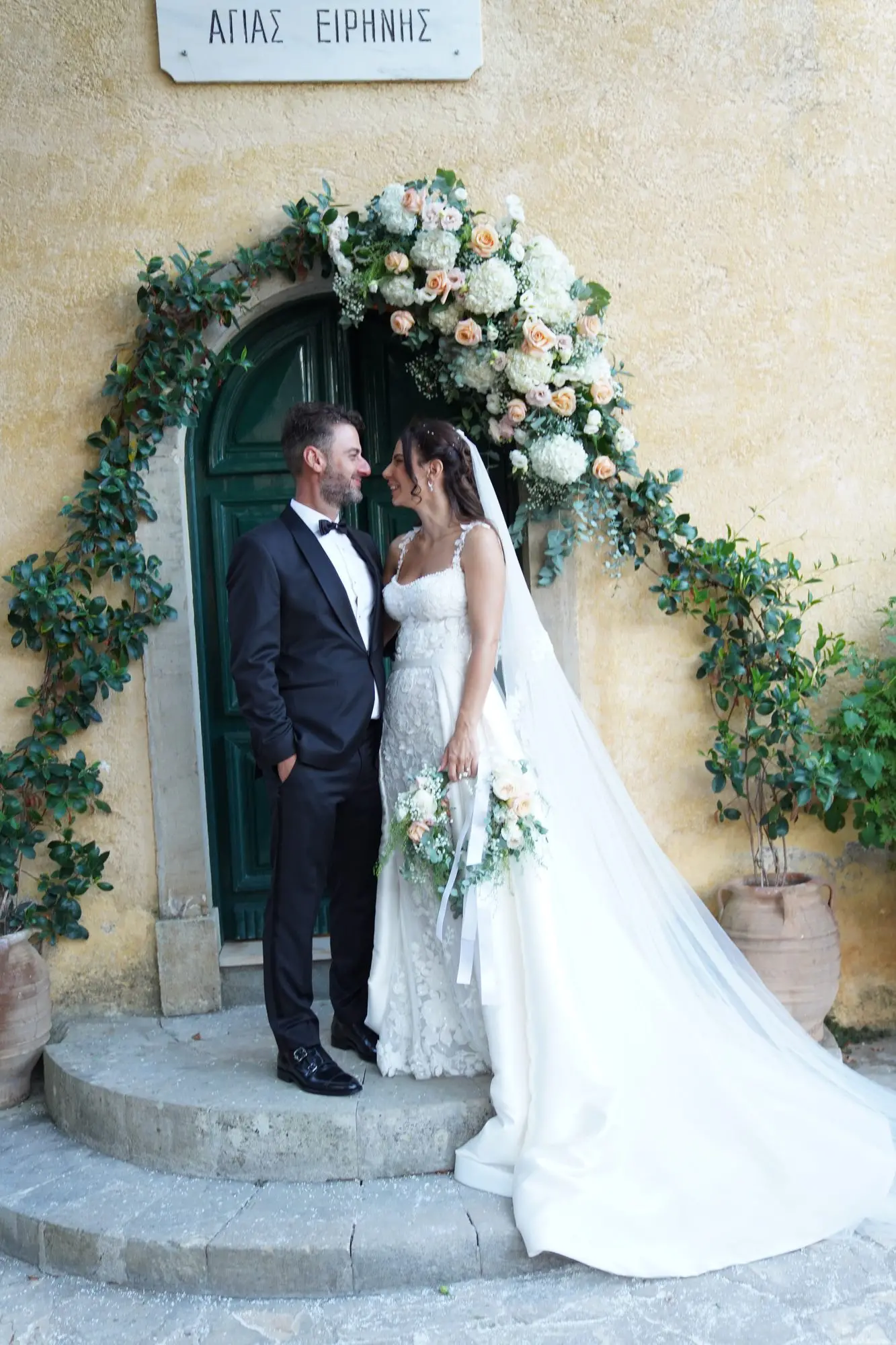
The Orthodox ceremony remained simple and deeply personal. The bride arrived accompanied by traditional musicians, in a procession that felt closer to an old Corfiot custom than to a conventional bridal entrance.
Her handmade wedding gown was designed by Kamelia Andrioti together with the bride herself, allowing it to become an extension of her own aesthetic rather than a separate element within the concept of the day.
Attached to the bridal bouquet was a small medallion holding photographs of the couple’s two fathers, both of whom had passed away. It was a quiet way of making them present for the ceremony.
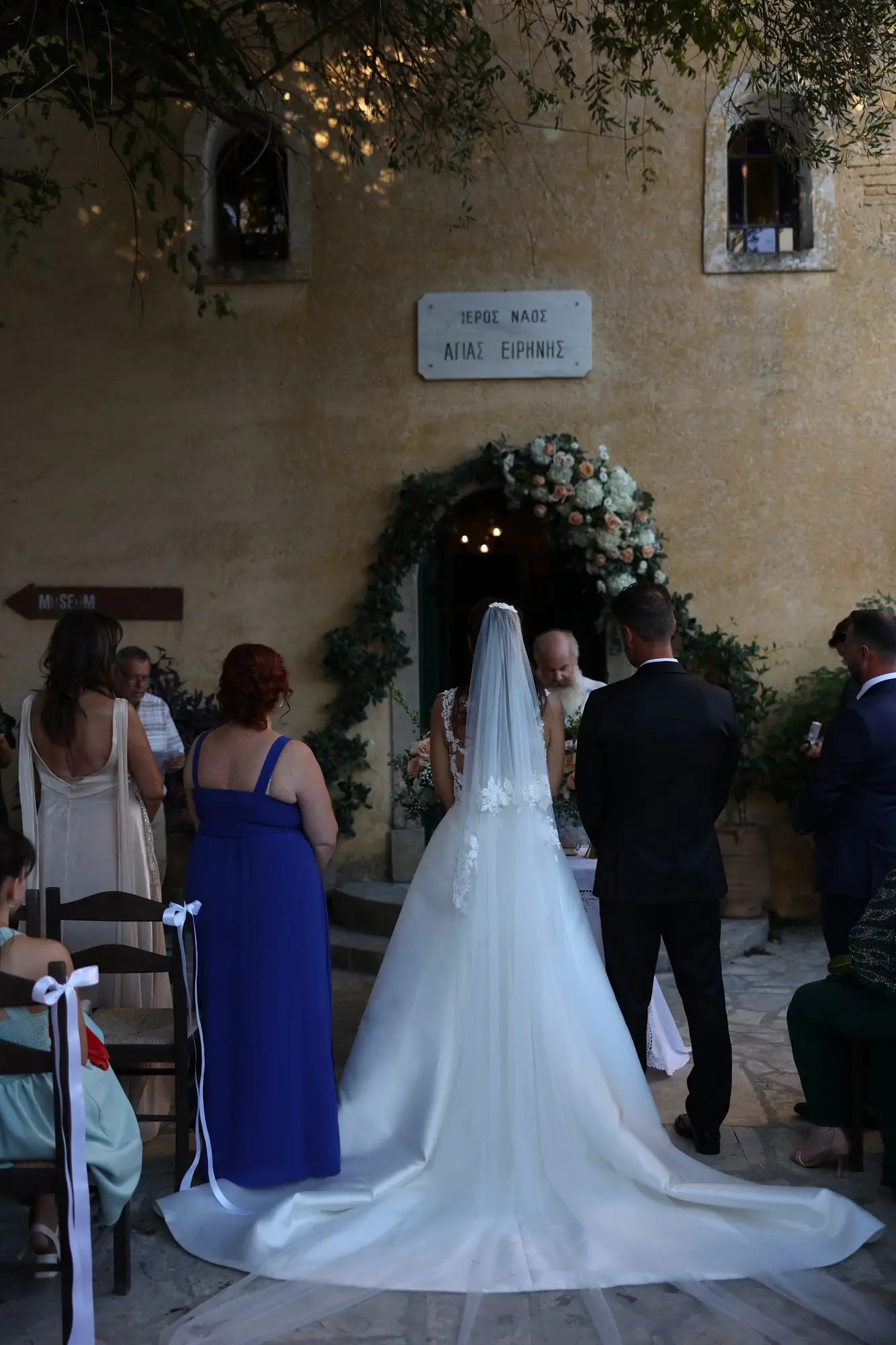
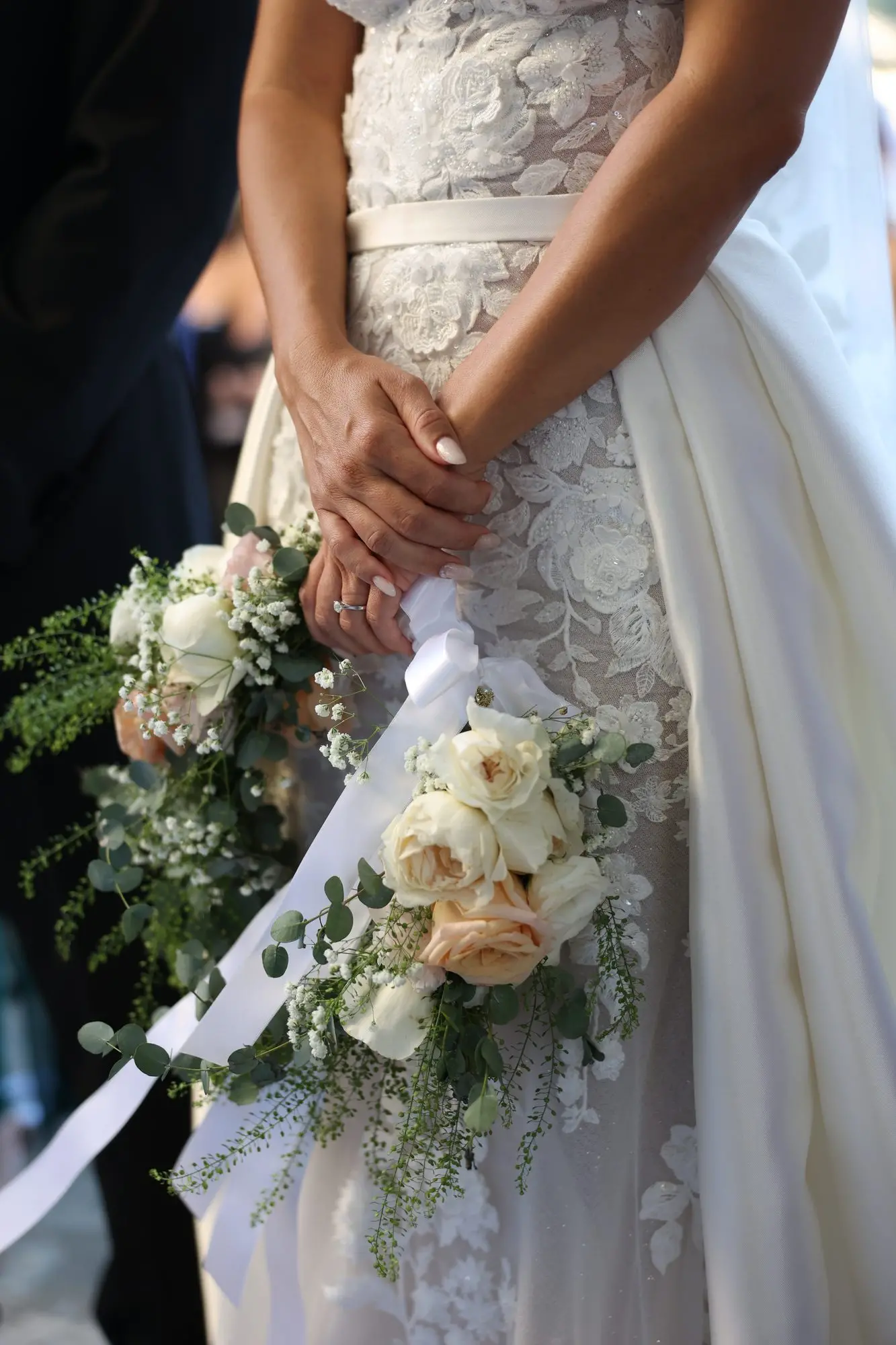
Perhaps that was the essence of the entire design: creating space not only for the people who were there, but also for those who remain part of the story.
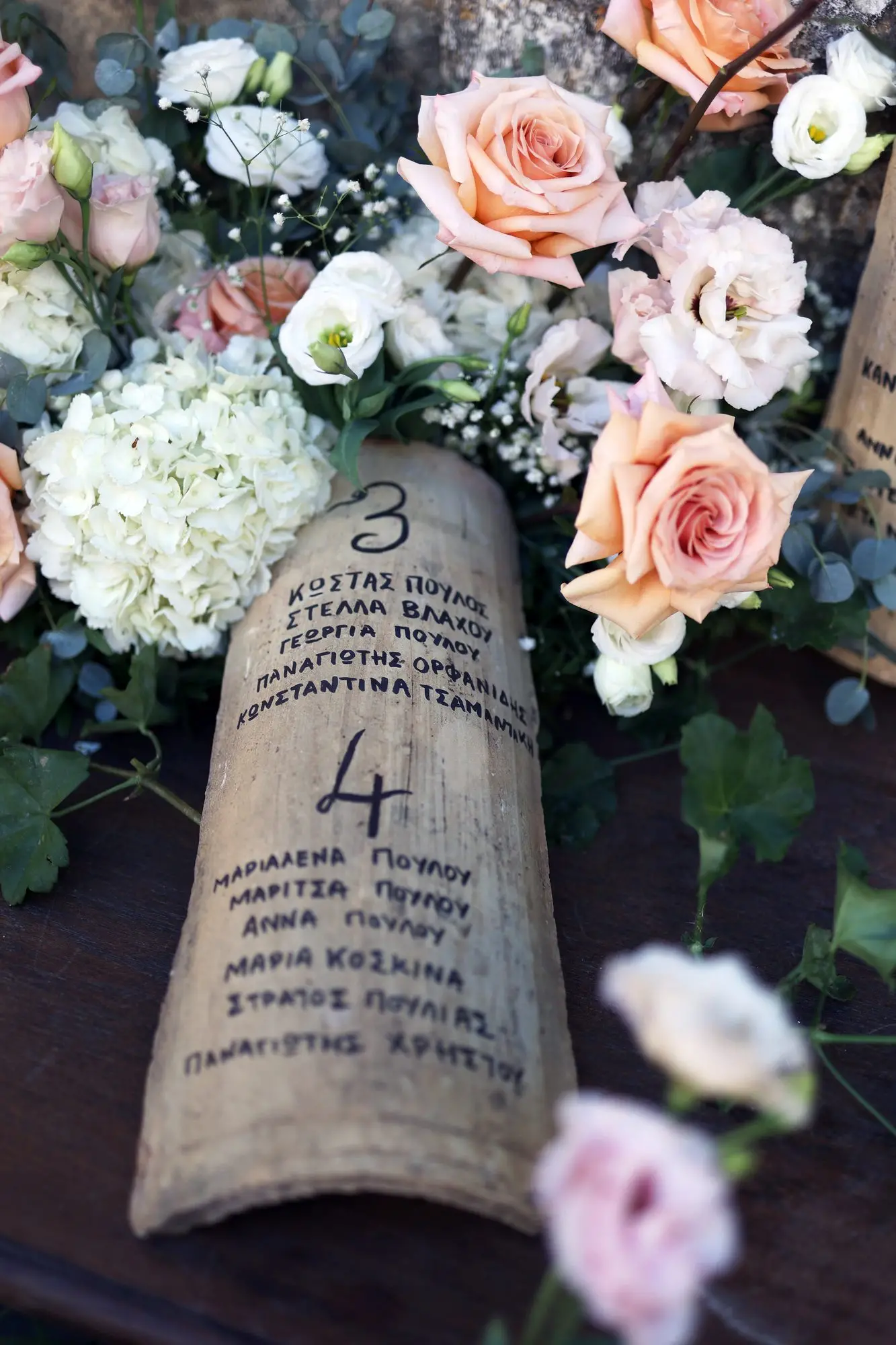
The guest list was intentionally small, and every person had travelled to Corfu to be there. Their experience was therefore designed with the same attention as the setting itself.
At every place setting was a personal handwritten note from the couple. Not a conventional thank-you message, but a specific shared memory — something they had experienced together, a story belonging uniquely to that relationship. Before dinner had even begun, every guest was holding a small piece of their own history with the couple.
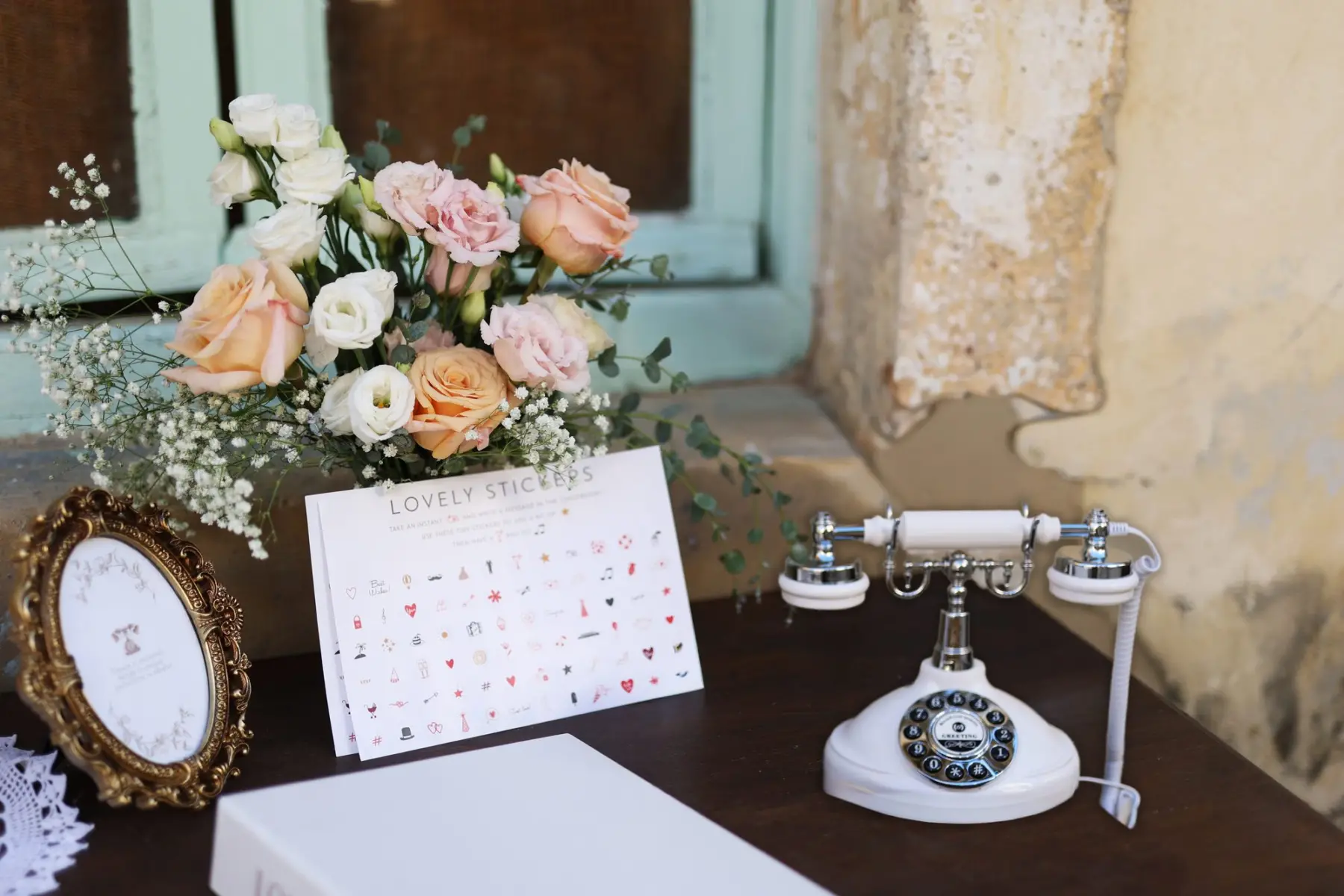
The wishes were not confined to paper. A vintage audio guestbook telephone recorded the voices of friends and family, while a Polaroid camera created a guestbook in real time — photographs, handwritten messages and moments from the evening becoming memories before the night had even ended.
And after darkness fell, the village changed for a few minutes.
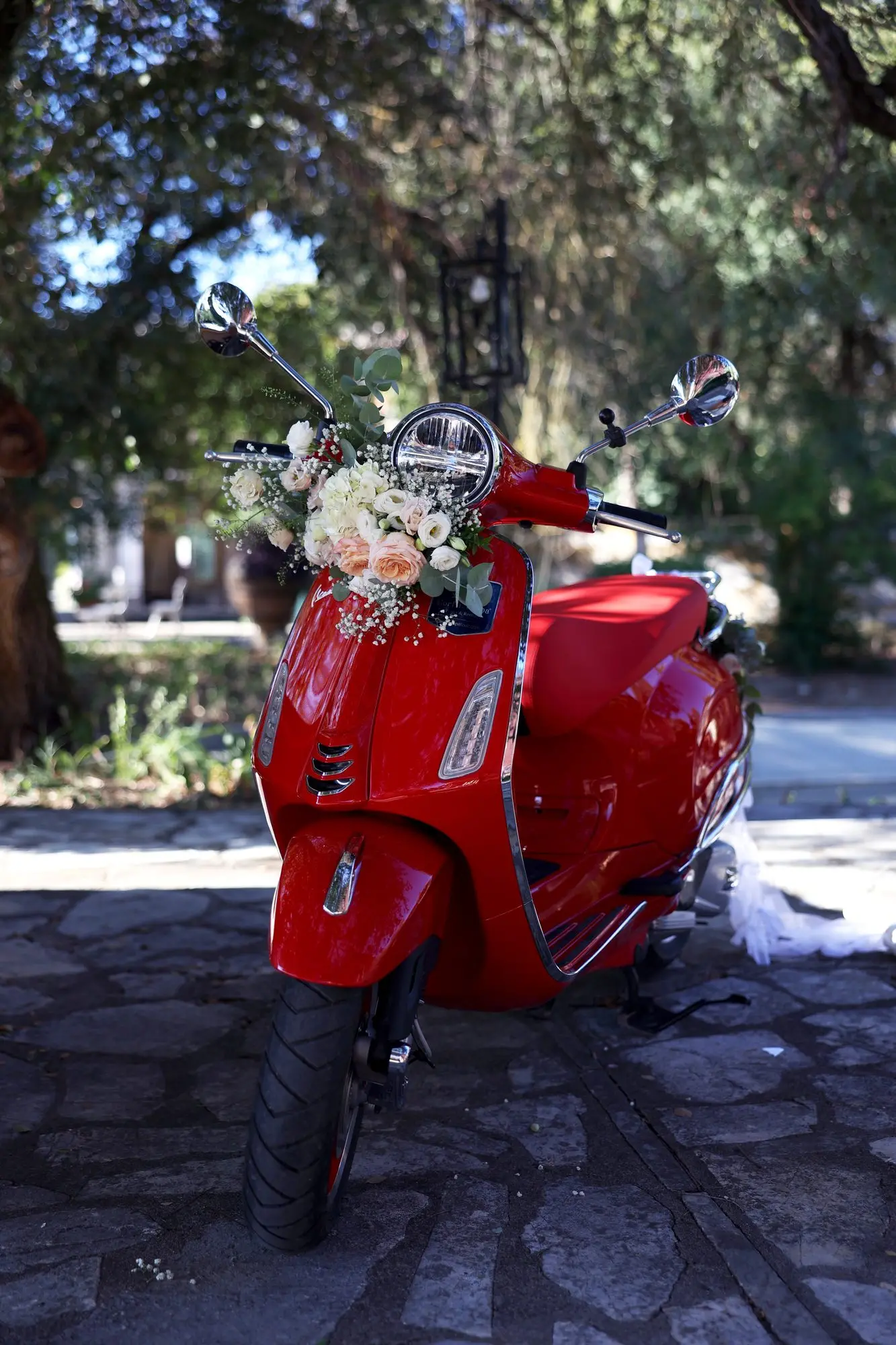
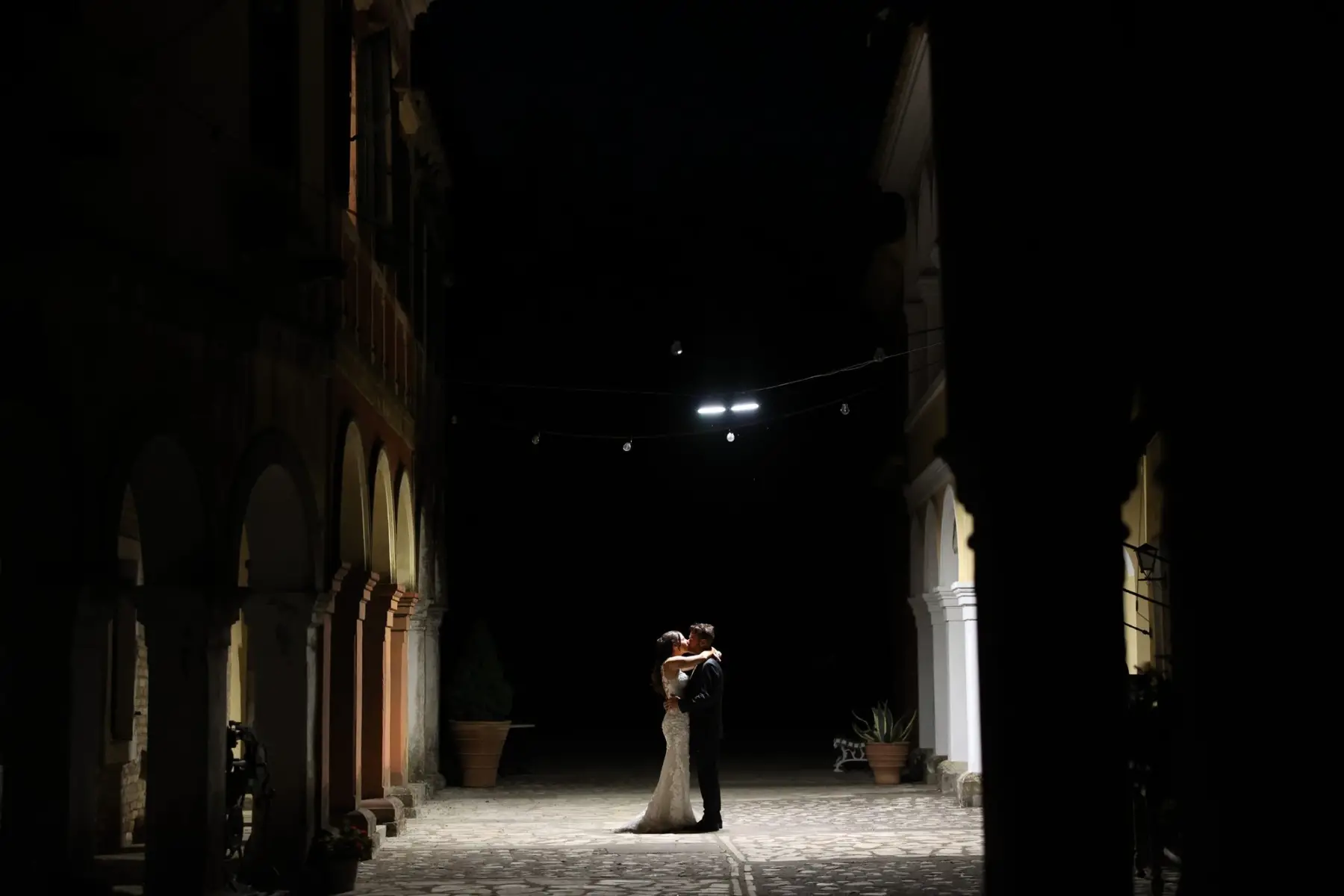
Before the couple made their entrance on a Vespa, the lights across the village were lowered and a single secluded spot remained softly illuminated. Away from the tables, they danced their first waltz to the soundtrack of Amélie. Their guests could see them from a distance, almost in silhouette, while the tables were already glowing in candlelight.
For a few minutes, the wedding became almost cinematic. Not to create a spectacular moment for the photographs, but to allow the couple to be genuinely alone together in the middle of a day filled with people.
For La Memoirette, this is what event design ultimately means: not only considering how a moment will look, but how it will be remembered long after everything else is over.
“We drew the day first, on paper, and then we lived it exactly as drawn. That is when I knew this was the work I wanted to do for others.”