An Athens baptism is rarely difficult to plan on paper. The church is booked, the lunch is booked, the godparent has the cross. What decides how the day actually feels is everything that happens between those fixed points — the drive, the heat, the forty minutes nobody accounted for. This is the day-of side of a christening in the capital, the part we spend most of our time on.
The morning runs on the church’s clock
Most Athens parishes schedule several baptisms on a Saturday or Sunday, often back to back. Your slot is a slot: if the service before yours runs long, you wait; if your party arrives late, the priest may not be able to hold the next family. We confirm the exact time with the parish office the week before, and again the day before, because slots do shift.
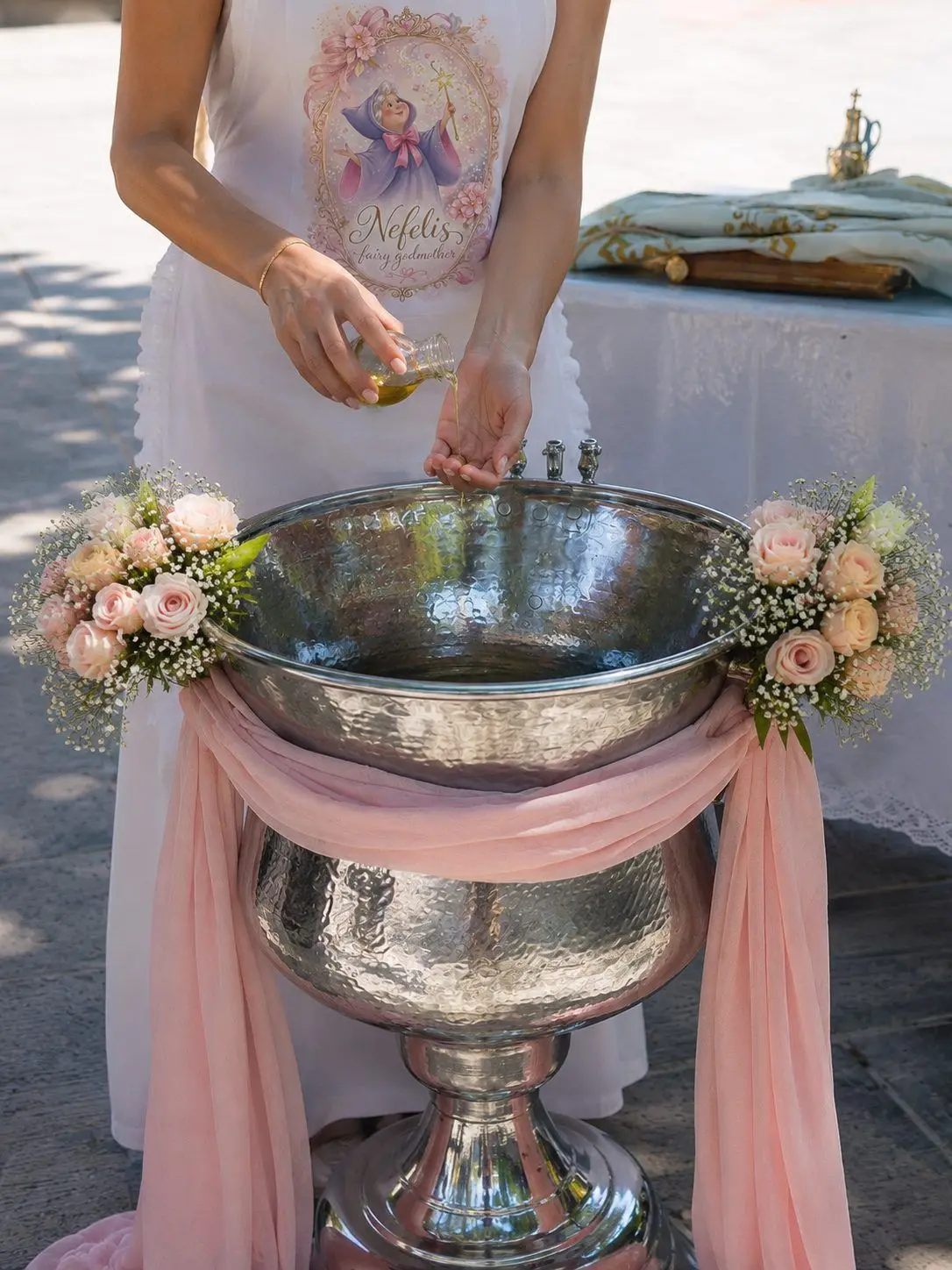
We ask the family and the godparent to arrive thirty minutes early, not fifteen. That half hour is when the font is filled and warmed, the photographer meets the priest, and the godparent is walked through where to stand. Arriving with the service already underway next door is normal; arriving flustered is not.
Moving the party across the city
Athens is not one place. A chapel in Kifisia and a lunch in Vouliagmeni can be a forty-minute drive on a quiet Saturday and well over an hour when the coastal road is busy in summer. We choose the reception within twenty to twenty-five minutes of the church wherever possible, and we plan the route with the drivers, not from a map app the night before.
For guests from abroad or from outside Attica, a shared coach or a small fleet of cars from one hotel removes the single biggest cause of late arrivals: fifty people each finding their own way and their own parking.
Heat, light and the hour you choose
Between June and September, a midday service in Athens means a full church with little air and a baby who has been dressed, undressed and dressed again. Many families now choose an early evening service instead, around six, which moves the reception into the cooler hours and gives the photographer softer light at the church door. In spring and autumn, late morning works well and lets the lunch run into the afternoon without anyone watching the clock.
Whichever hour you choose, we keep water, fans and a shaded spot outside the church for older guests. It is a small thing that is noticed only when it is missing.
Who holds what
The service moves quickly and there is no pause to look for things. Before anyone leaves the house, we pack a single labelled bag for the church: the oil and the white towel set, the baptismal outfit and the change of clothes, the cross, the candles, a spare set of baby clothes and the martirika in their tray. One person — usually us — is responsible for that bag from the car to the font and back.

The martirika are handed out at the church, so someone has to stand at the door with them while the family greets people. It should not be the mother.
“On a baptism morning, the parents should be holding the baby and nothing else. Everything else has a name next to it.”
The handover to lunch
The moment the service ends, the day changes character. Photographs with the godparent and family take ten to fifteen minutes outside the church; we tell the reception venue our real departure time, not the scheduled one, so the first drinks are poured as guests walk in rather than twenty minutes later. The baby usually needs a feed and a quiet room on arrival — we ask the venue for one in advance.
After that, the lunch can simply be a long, unhurried table. If the morning has been handled properly, nobody at it will have noticed how much was happening.
What time of day is best for a baptism in Athens?
Between June and September, many families choose an early evening service, around six, to avoid the midday heat. In spring and autumn, late morning works well and lets lunch run into the afternoon.
How far should the reception be from the church?
Ideally within twenty to twenty-five minutes. Athens traffic varies a great deal, especially along the coast in summer, so shorter distances keep the party together and the lunch on time.
Do we need a baptism planner if the church and venue are already booked?
Not necessarily, but day-of coordination is where most christenings go wrong: late arrivals, missing items for the service, a venue not ready when guests walk in. That is the part a planner takes off the parents’ hands.
How early should the family arrive at the church?
Thirty minutes before the service. Many Athens parishes schedule several baptisms back to back, and that time is needed to prepare the font, brief the godparent and meet the priest.